
Swing lock and position
If the machine stopped mid-swing, the house may be at an angle. Tell us how it's sitting. A house stuck at an angle can still be loaded, but we need to know which way it faces.
Home / Non-running excavators
Won't start · won't track · won't swing
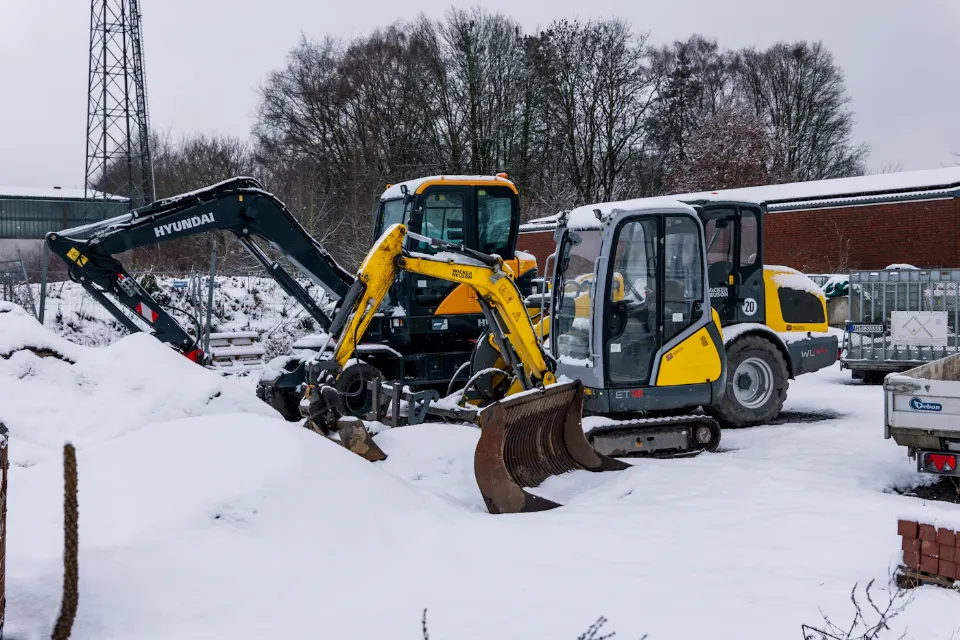
Won't start, won't track or won't swing? We buy it where it sits and bring the gear to load it.
Free offer · No obligation
About a minute. We call back with a number.
Why they stop
Batteries, starter or a seized engine.
Travel motors or final drives.
Swing motor or bearing trouble.
Tired pump or a burst line.
Overheated, cracked head, spun bearing.
Rodents, seized pins, rotten tracks.
Recent pickups
Have an excavator to sell? Get a number in minutes.
Loading a dead machine
Fix or sell?
Dead machines in depth
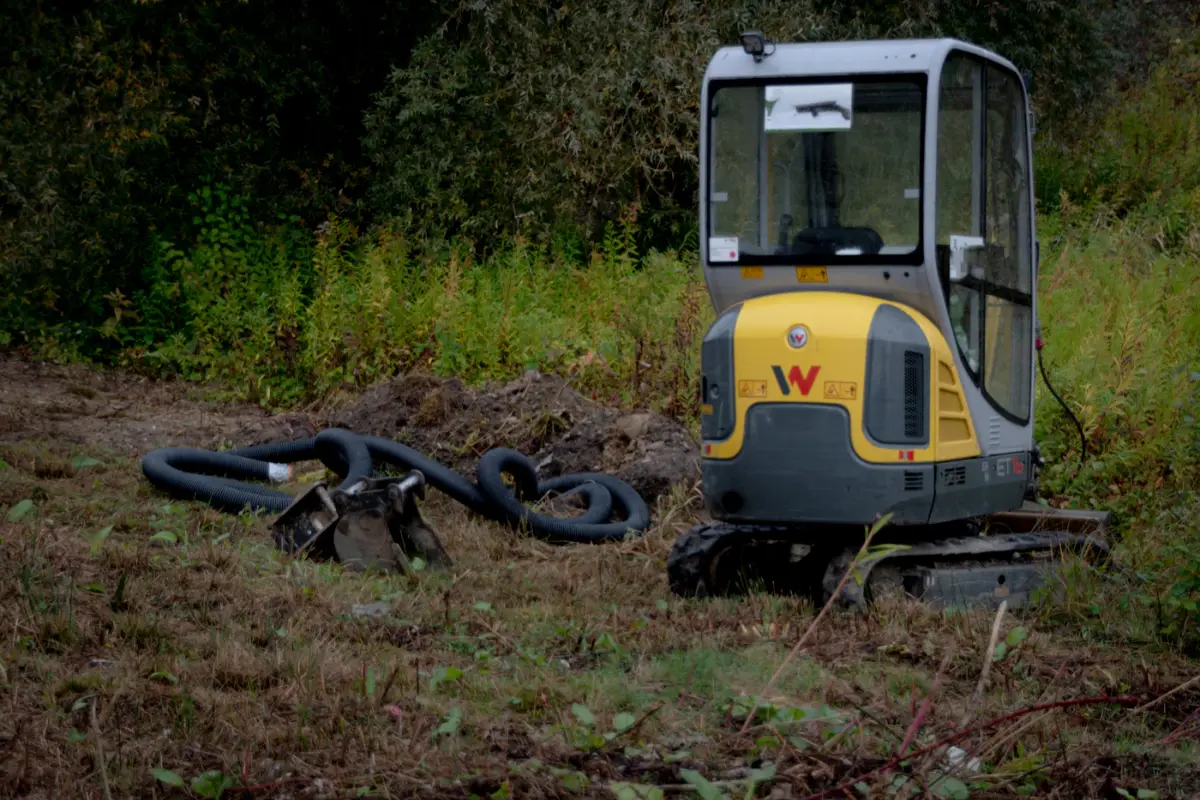
A dead excavator can still be loaded safely.
If the machine stopped mid-swing, the house may be at an angle. Tell us how it's sitting. A house stuck at an angle can still be loaded, but we need to know which way it faces.
A boom stuck in the air needs to be lowered or secured before transport. If the boom is stuck up, keep people out from under it and don't try to force it down.
Seized travel motors mean the tracks won't turn. A winch and a lowbed usually manage it. Tell us whether the machine sits on firm ground or has sunk in.
Failed pumps, electrical faults, seized engines and fuel problems are the usual reasons. Tell us what you know. A technician's diagnosis, if you have one, helps us price it fairly.
Engines, pumps, final drives and swing motors often have resale value. That's why a dead excavator is worth more than its weight in steel.
Repairs rarely pay off on a machine being sold as is. Get a repair quote and our number if you're unsure, then compare.
Machines that sat for a long time can sink into soft ground or freeze in place. A winch from firm ground usually frees them.
Keys help but aren't required. We need reasonable proof that the machine is yours.
Batteries, seals and hoses suffer when a machine sits. That's normal and priced in. Tell us how long it has sat.
Questions
Almost always. Even a machine that will never run again has a lot of steel, a counterweight, cylinders and a slew ring. Long storage just means we plan the loading differently.
Smaller machines get winched up a tilt deck. Larger ones may need a winch truck on a lowbed, or a second machine on site to help. Telling us whether the tracks turn and where the boom is sitting lets us pick the right setup.
Don't spend money on it. If a new battery gets it to crank, great, that helps. Anything beyond that is rarely worth it before a sale.
Tell us. Seized or buried tracks change the equipment we send and sometimes the timing. After a wet stretch we may suggest waiting until the ground firms up.
Keys help, but a missing key isn't a deal breaker on a non-runner. Proof that the machine is yours matters more.
Yes. A seized engine is common on machines that sat, and the rest of the machine still counts.
Tell us whether the tracks turn and where it's parked. We'll plan the pickup.